by Joanne Murphy
- 23 June 2026
Share:
In the end he was miles ahead. Andy Burnham, Mayor of Greater Manchester, is now Member of Parliament for Makerfield in what had been billed as the most consequential UK byelection of all time. Burnham is a long stalwart of British Labour politics. A former cabinet minister and Blairite, he withdrew from the national stage 10 years ago, disillusioned and defeated in his campaign for the Labour leadership. Since then, he has remade himself as a local leader — taking on a new mayoralty, placing himself at the center of debates about the UK’s unbalanced regions, and earning himself the Game of Thrones-esque moniker “King of the North.” This political evolution has not come without consequences for the Labour establishment. Burnham gradually became a clear and present danger to Prime Minister Keir Starmer, who consistently spiked his attempts to return to Westminster and had his people brief against him.
There is no love lost between the men. But the Labour Party’s catastrophic defeat in last month’s local elections meant that Starmer’s ability to stave off Burnham suddenly ran out of road. When a local MP fell on his sword to create a byelection, Burnham’s candidacy could no longer be denied. But the jeopardy of this strategy was that Burnham still had to win in an area which had seen a collapse in the Labour vote a month earlier, and the triumph of the Right in the guise of Nigel Farage’s Reform UK.
UK political commentary over the last month has been consistent in its predictions. The consensus was that this would be a close race, that Burnham, despite his personal popularity, may not necessarily be able to pull off a win and that even if he did it would be because the right vote had been split by the Reform UK’s rival Restore. The consequences of a loss would be catastrophic for UK Labour. Burnham is the UK’s most popular politician. If he couldn’t do it, then surely it was all over? Even on the eve of poll, there was concern that there might be only a few hundred votes between the candidates. When the votes were counted it was over 9,000. Burnham had not just won; he won in a way that left both the opposition and his Labour detractors astounded. The King of the North was ready to head South.
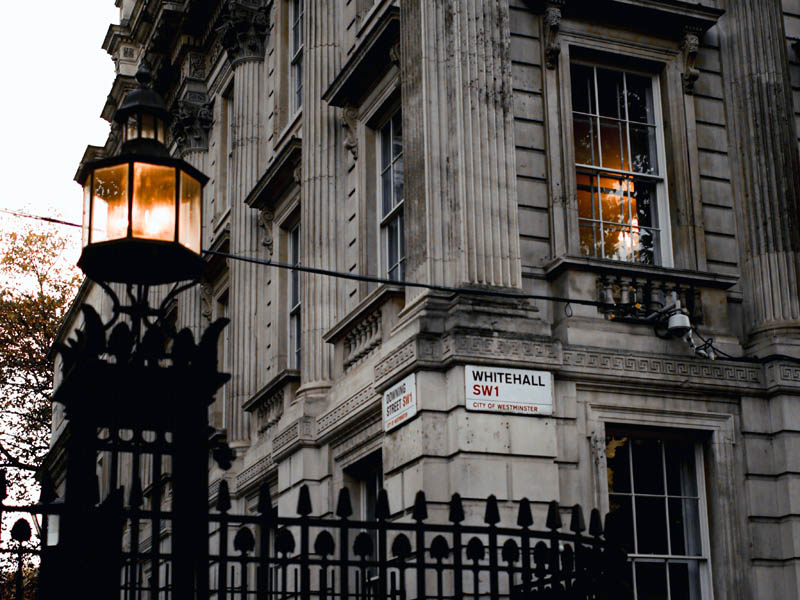
When the first draft of this blog was written, Starmer was still Prime Minister. Early on Monday he resigned as Labour leader in a now familiar spectacle of UK PM’s standing at a lectern telling the world about their achievements. At least on this occasion the weather was better and Starmer avoided the soaking that befell Rishi Sunak. The resignation was inevitable if Starmer was to avoid, as one podcaster put in, a political “Waco” type siege. As he spoke Burnham was on the train from Manchester to London — a journey symbolic in its own right in the annals of labour and workers history.
But how on earth, after a resounding victory in the general election two years ago, did things get to this point for Starmer? For anyone interested in leadership, Starmer is paradoxically fascinating. I (like many in the Labour party, I suspect) generally considered him a decent guy who may be a bit of a personality vacuum but could get things done in a tedious, technocratic way. But what has always intrigued me about him isn’t actually related to his political rise in the last number of years but his profile at an earlier point in his career. I did my PhD on the process of organizational change in policing in Northern Ireland (NI) — a process which was intricately connected to the peace process and the Good Friday Agreement of 1998 (Murphy, 2013). I interviewed dozens of people in and around policing and felt that I had a fairly exhaustive (boring and nerdy) knowledge of that period in the small and interconnected place that is NI.
Starmer, as a lawyer, talks a lot about this process of policing change, and his role in it. Indeed, he served as a human rights advisor to the Northern Ireland Policing Board (NIPB) from 2003–2008, “assisting in monitoring the PSNI’s compliance with the Human Rights Act.” The Policing Board is a key oversight mechanism to the NI police and the period when he was the Human Rights Advisor followed exactly the period of my PhD. But the curious thing is, he was never mentioned in any of my interviews, or the conversations around them. People talked endlessly about the Policing Board, about human rights, “the golden thread that ran through the new start to policing,” about accountability, and about change. But he never came up. I’m not saying that he wasn’t relevant, or doing a good job, or not very competent, I’m just saying that he was strangely invisible.
It struck me afterwards as such an odd thing. Dominic Cummings (Boris Johnson’s Brexit Svengali) described Starmer recently as a “non-player character” — an allusion from computer games and a brutal but somehow apt characterization. The problem is that there is rarely any room in politics or in leadership for this. You’ve got to have something about you, as we would say in Ireland. I don’t think this is necessarily a big debate about charisma, or that this is entirely Starmer’s problem. But he is someone who morphed from an organizational role that seemed to be very heavily focused on following rules and procedures, to one of enormous political complexity, requiring adaptive responses that weren’t just procedural or intellectual but were personal and emotional (Heifetz, 2009).
Political leadership requires a belief system, courage, and a core focus on what you want to achieve. It also requires an ability to flex — to operate in liminal and contested spaces.
Political leadership requires a belief system, courage, and a core focus on what you want to achieve. It also requires an ability to flex — to operate in liminal and contested spaces. I’ve written about this a bit using examples from extreme contexts of conflict (Murphy, 2025), and this is something that Starmer seemed to struggle with. You just got the impression that he didn’t believes in anything very much — or not enough to identify it, to operate politically in political spaces, to construct arguments that were meaningful. It’s extremely surprising for a Prime Minister and Starmer’s lack of a political pedigree is often mentioned as an explanation. Certainly, he couldn’t articulate his beliefs effectively or act on them in ways that were evocative for those around him. Most significantly, his judgement was often off on big areas of policy. Gradually and then suddenly he lost the room and with it his premiership. In the UK he is not just unpopular but actively disliked — a leader who was in office but struggled to wield power.
For Burnham however, everything has now changed. Once thought off as a “flip flopper” on policy, he has refocused and reframed his identity around a leadership of place that is as much about social class, as it is geography. Burnham presents himself as an outsider and perhaps he still is. Criticized for using the byelection as a “stepping stone” to Downing Street, he has instead spoken of his new constituency as a “touchstone” keeping him grounded and a place that is representative of the people whose lives need to get better. He is undoubtedly charismatic and personable. As he was sworn in as an MP, one of the Tory’s opposite him quipped, “He’s not the messiah!” to which Burnham replied “just a naughty boy” in a quick-witted reference to Monty Python’s Life of Brian — hard to think of an allusion more associated with British popular culture.
But you get the impression that personally, he has also done the work. He left Manchester for Westminster and then disillusioned he returned, building space to develop his own political position and build a machine of his own — overlapping but distinct from his political party. He is also connecting in a way with the public that is not just about popularity but also has an element of “popularism,” as opposed to the “populism” of Reform UK. Burnham campaigned on Hope. He put himself and his significant political credibility on the line, risking humiliation and defeat and an environment which was actively hostile to Labour representatives. At a time of doubt, he backed himself. In doing so, he has demonstrated that the Right can be overpowered, which may well have surprised even his supporters. This sensemaking of people, place, and the popular, rather than the populist, may be controversial but it is also something we may see more of — not just in the UK but in many places where progressive politics is facing an almost existential threat from the Right. This byelection was billed as the most significant in Britain’s history. It may well prove to be, but it has been watched closely by others much further afield who will be looking for leadership pathways away from an insidious slide into division and disarray. For Burnham himself, the next few weeks will determine if he will be challenged as he runs for Labour Leader and effectively Prime Minister. Either way, his journey has begun.
References
Heifetz, R. A., Grashow, A., & Linsky, M. (2009). The Practice of Adaptive Leadership: Tools and Tactics for Changing Your Organization and the World. Harvard Business Press.
Murphy, J. (2013). Policing for Peace in Northern Ireland: Change, Conflict and Community Confidence. Palgrave Macmillan.
Murphy, J. (2025). Leadership, liminality, and ‘wicked’ conflicts: John Hume and the untangling of the Northern Ireland ‘Troubles.’ Leadership 21(1): 11-32.
Phillips, S. (2021, Nov. 4). Democratic Strategists are embracing ‘popularism.’ But they’ve got it wrong. https://www.theguardian.com/commentisfree/2021/nov/04/democratic-strategists-are-embracing-popularism-but-theyve-got-it-wrong

Joanne Murphy is Chair of Inclusive Leadership at Birmingham Business School, University of Birmingham. Her research explores leadership, change and organisational development in political volatility, including environments affected by ethno-political conflict. She has worked with a range of organizations including NATO, UNESCO, the John Smith Foundation and the William J. Clinton Leadership Institute. Her fourth book Policing Northern Ireland: Leading through Crisis and Change is due for publication in 2026.