
Share:
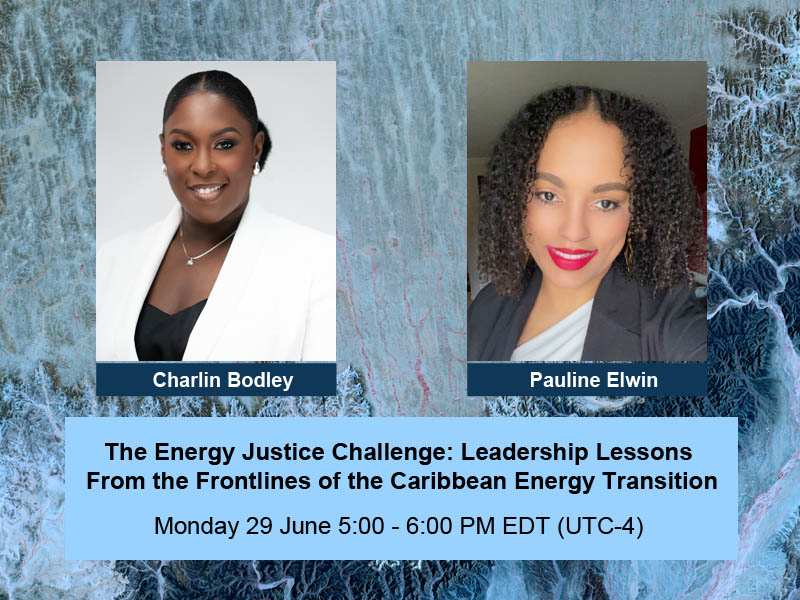
With Ms. Charlin Bodley and Dr. Pauline Elwin (Moderator)
Cost: Free to all. Sponsored by Global Voices, an initiative of ILA’s Leadership Development Member Community.
On the frontlines of climate change, Small Island Developing States (SIDS) face the most severe climate impacts, while contributing the least to global greenhouse gas emissions. Yet, their longstanding heavy dependence on fossil fuels persists against the backdrop of energy insecurity and climate vulnerability.
Drawing on leadership experiences across energy transition initiatives in the Caribbean and the Global South, this presentation examines the intersection of energy justice and climate justice through a leadership lens. It explores how leaders navigate complex trade-offs between the dimensions of the energy trilemma—reliability, affordability, and sustainability—while advancing ambitious clean energy goals in small island economies.
SIDS face unique challenges in pursuing a just energy transition. In particular, their electricity systems are characterized by small and isolated grids, heightened exposure to climate-related disasters, aging infrastructure and diseconomies of scale. Despite being endowed with abundant renewable energy resources, SIDS often lack the financial and institutional capacity to mobilize the substantial investments in grid modernization, energy storage, digitization and climate-resilient infrastructure needed to seize the transition opportunities presented by renewables.
Many SIDS are among the most indebted nations in the world, limiting their ability to finance the infrastructure needed to achieve ambitious energy and climate goals. Access to affordable capital remains a persistent challenge, with projects frequently facing higher financing costs, limited access to concessional funding, and elevated perceptions of risk among investors. The session will highlight lessons from the Caribbean’s energy transition journey and explore how leadership, innovative financing, and international partnerships can help address structural inequities that continue to shape energy transition outcomes in SIDS.